I got this recipe from Susanna Foo's book Chinese Cuisine.
This is a really great condiment to have around. I use it on grilled meats, game and seafood. You can use it as a base sauce and then add other ingredients to it as needed.
Ingredients
1 LBS jalapeno peppers, stems removed with seeds
1 large garlic head, cloves separated and peeled (10-15 cloves)
1/2 cup olive oil
2 teaspoons of kosher salt
1. Preheat oven to 350 degrees F
2. Place jalapeno peppers and garlic cloves in the shallow baking pan in a single layer. Spoon the oil all over the peppers, turning the peppers as needed to make sure they are covered in oil.
3. Roast for 30 minutes. Turn and roast for an additional 30 minutes, or until the garlic and peppers are very soft.
4. Cool and transfer to a food processor.
5. Puree.
6. Transfer to a jar and add the salt. Stir in the salt.
This keeps for 1 month in the refrigerator or 6 months frozen (if you freeze, i recommend putting it in tuperware).
Tuesday, October 11, 2011

Roasted Sichuan Peppercorns
I got this recipe from Susanna Foo's Chinese Cuisine.
Roasting peppercorns really brings out their natural flavor and spiciness. This method also adds a hint of smoky complexity to them. Another benefit is that the peppercorns become much softer, so you can easily crush them with a mortar and pestle.
Heat a wok until it is very hot, so you can almost see the heat rising from it. Add a whole bag of peppercorns. Reduce the heat to medium-low and give it a good shake every once and awhile (If you shake it continuously, some of the peppercorns will pop like popcorn, and you don't want that). Once a strong, intense aroma is released (about 15-20 minutes), turn off the heat. Now, they will generate some smoke, so it is best to keep the fan on, and the window open while you are doing this.
There will still be a lot of smoke in the wok after 20 minutes. I usually take the wok outside and open it up outside. Be careful, the smoke is quite pungent!
Let the peppercorns cool and store in a air tight jar. Ground the cool peppercorns as you need them (they will be significantly softer to crush and grind).
Roasting peppercorns really brings out their natural flavor and spiciness. This method also adds a hint of smoky complexity to them. Another benefit is that the peppercorns become much softer, so you can easily crush them with a mortar and pestle.
Heat a wok until it is very hot, so you can almost see the heat rising from it. Add a whole bag of peppercorns. Reduce the heat to medium-low and give it a good shake every once and awhile (If you shake it continuously, some of the peppercorns will pop like popcorn, and you don't want that). Once a strong, intense aroma is released (about 15-20 minutes), turn off the heat. Now, they will generate some smoke, so it is best to keep the fan on, and the window open while you are doing this.
There will still be a lot of smoke in the wok after 20 minutes. I usually take the wok outside and open it up outside. Be careful, the smoke is quite pungent!
Let the peppercorns cool and store in a air tight jar. Ground the cool peppercorns as you need them (they will be significantly softer to crush and grind).
Infused Sichuan Peppercorn Oil
I got this recipe from Susanna Foo.
This is a really useful oil to have around and can be used in lots of dishes when you want to add a little spice. I use it in stir fry and grilled meat and fish.
I usually use a Classico Tomato sauce glass jar. Any glass jar or bottle with do.
Ingredients
1 cup corn oil
2 tablespoons Roasted Sichuan peppercorns
3 garlic cloves
1. Heat the oil in a wok, until very hot, almost smoking.
2. Add the Sichuan peppercorns and garlic, and cook for 2 minutes. Remove the garlic once it browns, but before it blackens.
3. Remove from heat and cool.
4. Strain and store in a glass bottle
This is a really useful oil to have around and can be used in lots of dishes when you want to add a little spice. I use it in stir fry and grilled meat and fish.
I usually use a Classico Tomato sauce glass jar. Any glass jar or bottle with do.
Ingredients
1 cup corn oil
2 tablespoons Roasted Sichuan peppercorns
3 garlic cloves
1. Heat the oil in a wok, until very hot, almost smoking.
2. Add the Sichuan peppercorns and garlic, and cook for 2 minutes. Remove the garlic once it browns, but before it blackens.
3. Remove from heat and cool.
4. Strain and store in a glass bottle
Grilled Pork with Jalapeno Pepper Puree
I love barbecue!
I like to marinate my meat in a combination of soy sauce, garlic and honey. I usually try and marinate anything in a zip lock bag, I found it imparts more flavor onto meat that in a dish. I guess this is because in a bag, the juices enter in from all sides,whereas in a dish, you constantly have to flip every 30 minutes or so.
I got this recipe straight from Susanna Foo's Chinese Cuisine.
Its delicious and fantastic!!
You can either cook with a gas barbecue or a charcoal barbecue. I prefer charcoal, as it imparts a delicious flavor to meat and gives for a nice "slow" grilling cycle. If you choose to use a charcoal barbecue, use a chimney starter, not lighter fluid. Also, use natural charcoal, not lighter infused charcoal. There is no need adding chemicals to your diet and it is better for the environment!
Ingredients
2 lbs boneless pork loin, 1/2 inch thick
2 tablespoons chopped fresh cilantro leaves
2 garlic cloves, minced
1 tablespoon minced fresh lemon grass
1/2 teaspoon roasted Sichuan peppercorns
B
1/4 cup soy sauce
1/4 cup vegetable oil
2 tablespoons honey
Combine A in a food processor or blender and puree.
Add B and process until all the ingredients mix together and form a paste. Transfer to a small bowl and set aside.
Slice the pork loin thin, to about 1/2 inch thick. It might be easier to chuck it in the freezer for a 30 minutes or so to cut it. Alternatively, have your butcher cut it to 1/2 inch thick. Place the meat between 2 sheets of wax paper. Pound the slices until they are about 1/4 inch thick. (You can use the back of a cleaver and your hand to do this).
Take a 1/4 cup of the puree and set aside. You can use this as a topping for the dish when it is done.
Spread the remaining puree all over the meat. Refrigerate for at least 3 hours. The longer you can let it sit in the fridge, the better it will taste (maximum of 12 hours).
Once you are ready to grill the pork, remove it from the fridge and let it come up to room temperature (about 30 minutes). In the meantime, fire up your BBQ! If you are using slow burning charcoal and a chimney starter, it will take a good 40 minutes to get the coals nice and hot.
Grill to desired doneness! Serve with the reserve marinade.


I like to marinate my meat in a combination of soy sauce, garlic and honey. I usually try and marinate anything in a zip lock bag, I found it imparts more flavor onto meat that in a dish. I guess this is because in a bag, the juices enter in from all sides,whereas in a dish, you constantly have to flip every 30 minutes or so.
I got this recipe straight from Susanna Foo's Chinese Cuisine.
Its delicious and fantastic!!
You can either cook with a gas barbecue or a charcoal barbecue. I prefer charcoal, as it imparts a delicious flavor to meat and gives for a nice "slow" grilling cycle. If you choose to use a charcoal barbecue, use a chimney starter, not lighter fluid. Also, use natural charcoal, not lighter infused charcoal. There is no need adding chemicals to your diet and it is better for the environment!
Ingredients
2 lbs boneless pork loin, 1/2 inch thick
2 tablespoons chopped fresh cilantro leaves
2 garlic cloves, minced
1 tablespoon minced fresh lemon grass
2 tablespoons Jalapeno Pepper Puree
1/2 teaspoon roasted Sichuan peppercorns
B
1/4 cup soy sauce
1/4 cup vegetable oil
2 tablespoons honey
Combine A in a food processor or blender and puree.
Add B and process until all the ingredients mix together and form a paste. Transfer to a small bowl and set aside.
Slice the pork loin thin, to about 1/2 inch thick. It might be easier to chuck it in the freezer for a 30 minutes or so to cut it. Alternatively, have your butcher cut it to 1/2 inch thick. Place the meat between 2 sheets of wax paper. Pound the slices until they are about 1/4 inch thick. (You can use the back of a cleaver and your hand to do this).
Take a 1/4 cup of the puree and set aside. You can use this as a topping for the dish when it is done.
Spread the remaining puree all over the meat. Refrigerate for at least 3 hours. The longer you can let it sit in the fridge, the better it will taste (maximum of 12 hours).
Once you are ready to grill the pork, remove it from the fridge and let it come up to room temperature (about 30 minutes). In the meantime, fire up your BBQ! If you are using slow burning charcoal and a chimney starter, it will take a good 40 minutes to get the coals nice and hot.
Grill to desired doneness! Serve with the reserve marinade.


Friday, September 30, 2011
Raiyu (Chinese Hot Chili Oil)
I first encountered Raiyu (らい油 ) when I was living in Japan. Its the equivalent of Chinese Chili Oil. You most often see this at Chinese restaurants as a condiment, or in a Ramen shop specializing in tantanmen. If you ever have yaki gyoza, you usually see some of this oil in a distinctive small red bottle to add to your soy sauce or dipping sauce to spice it up a bit.
You can purchase a commercial variety of Raiyu at at Chinese or Asian grocery store, but it really does not taste the same as making your own!
I use this to temper stir fry, to give them a little heat, or in soups to give them a little extra spice, which is particularly nice in winter months. The roasted peppercorns give it a distinctive smoky complexion.
The difficulty with this recipe is that their are no exact proportions, as it really depends on how spicy you want the oil. I like my oil really spicy, but at the same time, I don't like wasting a perfectly good fresh chili just to make sauce.
I stumbled upon a solution when I ordered some tea smoked duck sauteed with roasted chilies from a local Sichuan restaurant in Solano, CA (China Village). They make a delicious spicy duck with hints of smoky complexity. After you finish the meal, you have a whole bunch of chilies left over. There is no reason to waste those and throw them out!
I supplemented the flavor with infused Sichuan peppercorn oil, which I got from Susanna Foo's cookbook.
This double frying technique really twists out some additional flavor from the chili and lends itself to a deliciously complex flavor.
Chilies are really the key ingredient for this recipe. You need to get alot of them. I usually get enough to stuff a empty tomato sauce jar loosely packed with chilis.
Because you are frying all these ingredients in very hot oil, you can get allot of smoke. This is actually really good for the oil and gives it its distinctive smoky flavor. Unfortunately, it can also really stink up your house and cause your smoke detector to go off. I had a coughing spat because of it! If possible, try to do this outside on an open fire or on your bbq (just remove the grill beforehand and place the wok on the hot coals directly).
Ingredients
24 oz glass jar (about the size of a glass tomato sauce jar) with lid
Vegetable oil, 1 cup
Sesame seed oil (胡麻油 Goma Abura), 1 cup
Sichuan peppercorn oil, 1/4 cup
2 large pieces dried mikan (tangerine) peel
2 tablespoons roasted Sichuan peppercorns
Lots of fresh or dried chilies
5 garlic gloves, peeled and whole
1. Add all the different oils into the wok and heat until very hot, almost smoking.
2. Add the dried mikan and fry for a few minutes until the flavor is released
3. Add roasted Sichuan peppercorns and cook for a few minutes
4. Add the dried or fresh chilies. Continue to fry until the chilies start to darken. Before they turn black, reduce the heat or remove from heat.
5. Add the garlic last, allowing the garlic to fry a dark golden brown. If oil is too hot, you will blacken the garlic which will give it an off flavor. If you see the garlic getting to that blackened stage, remove it with a slotted brass strainer. If the oil is the right temperature, the garlic will turn golden brown and remain that way.
6. Remove from heat. Let the mixture cool thoroughly. The oil should take on a dark reddish hue.
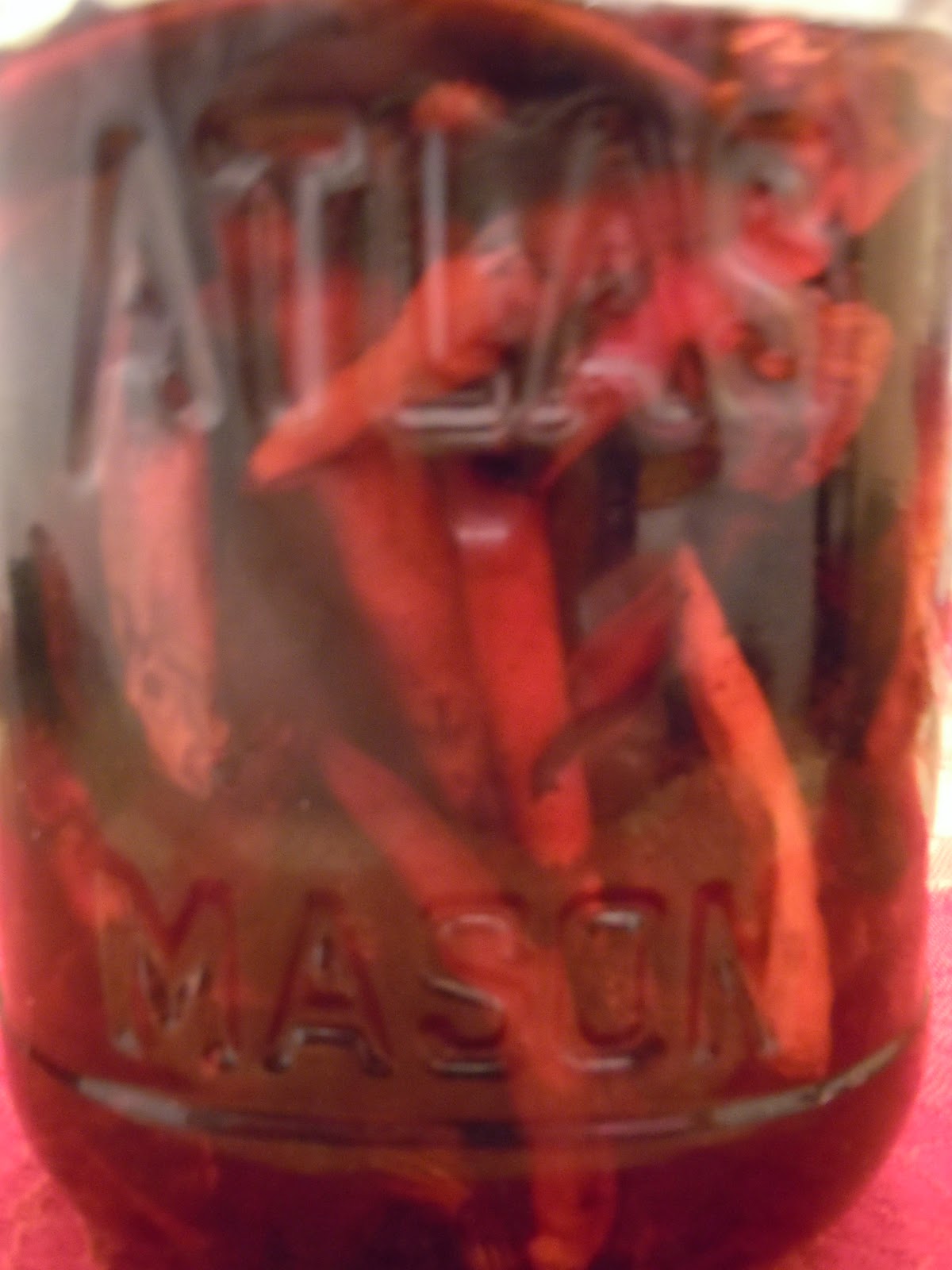
7. I usually store it in a large glass tomato sauce jar with a lid. I will usually discard the fried garlic and strain out the peppercorns, allowing the mikan and the chilies to remain. I then will take the chilies and mikan peel and stuff them back into the glass jar and funnel the oil back into the jar. At this point, the oil is ready to be used for cooking.
The nice thing about storing it with the mikan and the chilies is that the oil continues to absorb the flavor of both ingredients.
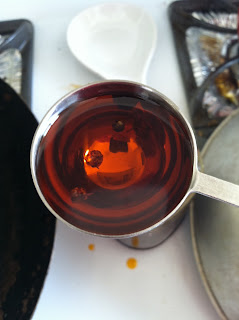

You can purchase a commercial variety of Raiyu at at Chinese or Asian grocery store, but it really does not taste the same as making your own!
I use this to temper stir fry, to give them a little heat, or in soups to give them a little extra spice, which is particularly nice in winter months. The roasted peppercorns give it a distinctive smoky complexion.
The difficulty with this recipe is that their are no exact proportions, as it really depends on how spicy you want the oil. I like my oil really spicy, but at the same time, I don't like wasting a perfectly good fresh chili just to make sauce.
I stumbled upon a solution when I ordered some tea smoked duck sauteed with roasted chilies from a local Sichuan restaurant in Solano, CA (China Village). They make a delicious spicy duck with hints of smoky complexity. After you finish the meal, you have a whole bunch of chilies left over. There is no reason to waste those and throw them out!
I supplemented the flavor with infused Sichuan peppercorn oil, which I got from Susanna Foo's cookbook.
This double frying technique really twists out some additional flavor from the chili and lends itself to a deliciously complex flavor.
Chilies are really the key ingredient for this recipe. You need to get alot of them. I usually get enough to stuff a empty tomato sauce jar loosely packed with chilis.
Because you are frying all these ingredients in very hot oil, you can get allot of smoke. This is actually really good for the oil and gives it its distinctive smoky flavor. Unfortunately, it can also really stink up your house and cause your smoke detector to go off. I had a coughing spat because of it! If possible, try to do this outside on an open fire or on your bbq (just remove the grill beforehand and place the wok on the hot coals directly).
Ingredients
24 oz glass jar (about the size of a glass tomato sauce jar) with lid
Vegetable oil, 1 cup
Sesame seed oil (胡麻油 Goma Abura), 1 cup
Sichuan peppercorn oil, 1/4 cup
2 large pieces dried mikan (tangerine) peel
2 tablespoons roasted Sichuan peppercorns
Lots of fresh or dried chilies
5 garlic gloves, peeled and whole
1. Add all the different oils into the wok and heat until very hot, almost smoking.
2. Add the dried mikan and fry for a few minutes until the flavor is released
3. Add roasted Sichuan peppercorns and cook for a few minutes
4. Add the dried or fresh chilies. Continue to fry until the chilies start to darken. Before they turn black, reduce the heat or remove from heat.
5. Add the garlic last, allowing the garlic to fry a dark golden brown. If oil is too hot, you will blacken the garlic which will give it an off flavor. If you see the garlic getting to that blackened stage, remove it with a slotted brass strainer. If the oil is the right temperature, the garlic will turn golden brown and remain that way.
6. Remove from heat. Let the mixture cool thoroughly. The oil should take on a dark reddish hue.
7. I usually store it in a large glass tomato sauce jar with a lid. I will usually discard the fried garlic and strain out the peppercorns, allowing the mikan and the chilies to remain. I then will take the chilies and mikan peel and stuff them back into the glass jar and funnel the oil back into the jar. At this point, the oil is ready to be used for cooking.
The nice thing about storing it with the mikan and the chilies is that the oil continues to absorb the flavor of both ingredients.

Thursday, September 29, 2011
Potato Masala

I grew up eating these for breakfast on Sundays. Its real comfort food, and quite delicious!
You can also eat potato masala with Idly, Dosa or just with rice and yogurt!
Ingredients
3 red potatoes
Mustard seeds 1 to 2 teaspoons
2 white onions, Julienne
1 inch piece ginger, peeled and finely chopped
1 jalapeno pepper, finely minced (any thin green chili will do)
Turmeric, 1/2 teaspoon
Salt, 1/2 to 1 teaspoon
Fresh coriander leaves for garnish
Directions
1. Boil potatoes, unpeeled for 20 minutes, or until cooked. You can tell when the potatoes are done by pricking them with a fork. When you can easily insert a fork into the potato, it is done. By this time, most of the skin of the potato will have fallen off.
2. Drain potatoes and soak or run under cold water to stop the cooking process. Peel off the remaining skin (usually you can just do this with your hands, but use a pairing knife if you have to). Dice the potatoes into an even dice (this will insure an even cooking time). Set aside.
3. Make the Masala
 Add a swig of vegetable oil to a wok, enough to lightly coat the wok. Heat just until the oil starts to shimmer. Reduce the heat and add mustard seeds. Stir fry for 1 minute. Next add onions and stir fry for 2 minutes, or until the onions are translucent. Add ginger and jalapeno pepper and stir fry for 1 more minute. Lastly, add the Turmeric and salt.


 5. Add approximately 1 cup of water to the potatoes, and cook on low heat for 20-30 minutes, or until the potatoes are really soft, but not falling apart. As they cook, the potatoes will loose their structural integrity, so it is important to stir them softly. You also do not want the potatoes to burn, which could happen if you do not add enough water.
6. Garnish with freshly chopped coriander leaves!
Wednesday, September 28, 2011
Quick and Dirty Scrambled Eggs
When I was growing up, my mom made me eat scrambled eggs. It was a family tradition--scrambled eggs every sunday. I hated scrambled eggs! No flavor, runny and just all around disgusting.
When I moved to California, I met a friend named Daniel. He made his scrambled eggs with duck fat! My god, how delectable!
Whenever I roast a chicken, I will save the vegetable rack that I made for the chicken. I will also save all the fat that comes out of the chicken.
I take that fat, heat it in a pan, and add the eggs to it, scrambling it in the pan. I then cut up the carrot rack, add all the cut up fennel, onions, garlic and rosemary that I used to flavor the chicken.
Finish it off with a little lavender salt and pepper and it is delicious!

When I moved to California, I met a friend named Daniel. He made his scrambled eggs with duck fat! My god, how delectable!
Whenever I roast a chicken, I will save the vegetable rack that I made for the chicken. I will also save all the fat that comes out of the chicken.
I take that fat, heat it in a pan, and add the eggs to it, scrambling it in the pan. I then cut up the carrot rack, add all the cut up fennel, onions, garlic and rosemary that I used to flavor the chicken.
Finish it off with a little lavender salt and pepper and it is delicious!

Subscribe to:
Posts (Atom)